
Becoming an Animal: Experiencing an Animal’s Perspective Through Telepathic Communication
“Becoming An Animal” is a signature exercise that I have used in my animal communication foundation courses since the 1970s. I included it in my book, Animal Talk, and the Animal Communication Mastery Series audio recordings.
It is one of my favorite exercises for helping people get beyond their own thoughts, projections, and preconceived ideas and directly experience what an animal feels, senses, and communicates. Most people are able to experience at least some of an animal's perspective the first time they do it. For others, the experience develops with practice. And everyone can benefit from continuing to deepen this way of telepathic sensing.
Recently, however, students have asked questions about the exercise that have prompted me to clarify what I mean by “becoming” an animal.
You Don't Enter an Animal's Body
A few students wondered where they should enter the animal's body (assuming it might be the crown chakra or third eye) to experience the animal's senses, and where and how they were supposed to exit afterward.
There is no entering or exiting an animal's body in this exercise. Nor do you need to project yourself into an animal's body. It isn’t like the 1956 classic horror film “Invasion of the Body Snatchers” that I saw as a child, nor is it some kind of spirit possession or takeover. Yikes!
The word “becoming” describes an experiential shift in perspective, not a physical or spiritual transfer from one body into another.
You remain yourself, present and aware. The animal remains fully themselves. Yet the usual sense of separation between you softens enough that you can share aspects of the animal's experience directly.
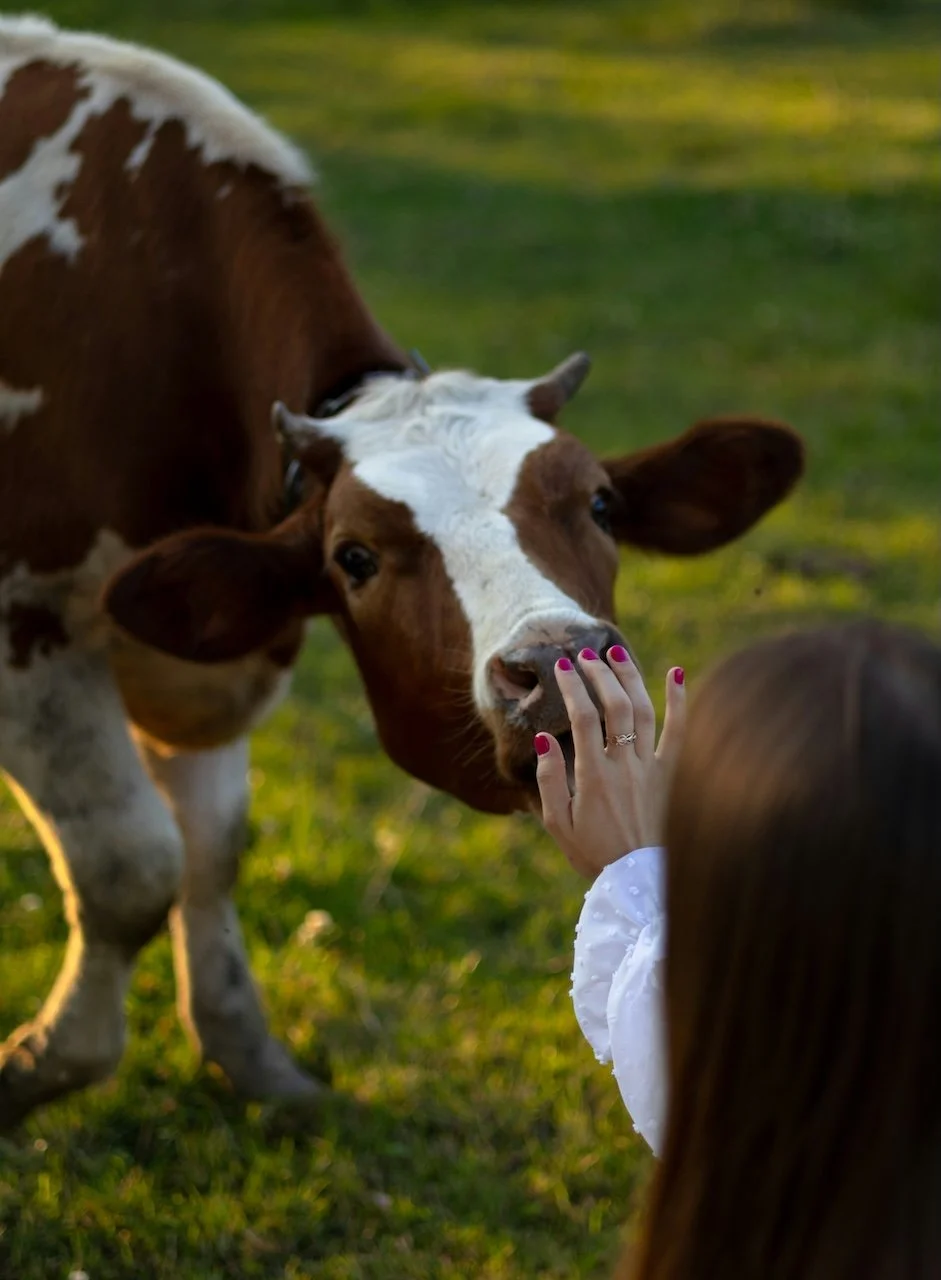
Oneness Is Not Losing Yourself
Another student, after I led a short version of the exercise, described what she experienced. Her account included her own thoughts and feelings mixed in with what she felt the animal was experiencing.
When I pointed this out, she asked a very good question: How can you merge with an animal without getting your own feelings and thoughts mixed into theirs?
The answer is that the exercise is not about merging your identity with the animal's. Her experience actually illustrated one of the pitfalls of approaching it that way.
You are relaxing the sense of separation enough to share the animal's perspective while maintaining awareness of yourself. You experience the world through the animal's senses and point of view by sharing energetic space with the animal rather than observing from the outside.
It is a form of oneness, but oneness does not require sameness or loss of individuality.
The animal remains the animal. You remain you. At the same time, you can participate in our unified field of awareness deeply enough to experience how life feels to that being.
This is subtler than shape-shifting, possession, projection, merging identities, or losing yourself in an experience. You experience the animal's senses, feelings, thoughts, and way of being through your own telepathic senses, which parallel the physical senses.
Am I Just Imagining It?
Another student asked how to make the shift into the animal's viewpoint when the only way she knew to begin was to imagine or pretend what it would be like.
This is an important question because imagination is often misunderstood in learning telepathic communication.
Imagination can be the doorway. It doesn't have to be the destination.
When you allow yourself to imagine freely, without straining to manufacture an experience or worrying about whether you're “doing it right,” you loosen the grip of the analytical mind. You become more receptive to impressions that may arise spontaneously.
Perhaps you begin by imagining what it might be like to be a dog smelling the ground. As you relax into the experience, something may change. You may suddenly receive a smell you weren't expecting, an awareness of layers of scent you hadn't thought about, an attraction to one particular place, a physical sensation, an image, an emotion, or simply an inner knowing.
You are not literally smelling through the dog's physical nose. The dog's experience of smelling is being received through your corresponding telepathic sense.
The experience may be vivid or very subtle. People receive telepathically in different ways, just as their physical senses and ways of processing experience differ.
This is one reason I encourage people to be receptive and childlike in doing the exercise. A child can enter wholeheartedly into an experience without constantly stopping to ask, “Did I make that up?”
Discernment comes with practice. First, allow yourself to experience.
What If the Animal Is Very Different From Me?
Another student found the exercise easier with a cat, a familiar species, but had difficulty imagining how to experience the perspective of an animal very different from herself.
Again, you don't have to figure out beforehand what it is like to be that animal. Follow the exercise and gently allow yourself to experience whatever comes.*
Notice the animal. Become quiet. Feel close contact with the being. Relax your usual human-centered perspective and become receptive. Instead of trying to construct what the animal “should” experience, allow impressions to arise.
A very different species can be a wonderful teacher because you have fewer familiar assumptions to rely upon. You may receive something completely outside what you expected.
You don't need to understand intellectually how another species experiences the world before you can communicate telepathically with them. The experience itself can teach you.
From Observation to Participation
The purpose of “Becoming an Animal” is to temporarily step outside our habitual human-centered perspective and experience why life feels natural, appropriate, and pleasurable to another being through their own way of sensing.
When people genuinely experience another species' perspective, even briefly, it becomes much harder to regard animals as lesser beings, projections of ourselves, or objects.
This is why I emphasize this way of becoming one with an animal as such a valuable practice. It helps us step beyond our own thoughts, preconceived notions, beliefs, and worldview and directly experience what an animal communicates through their senses, feelings, thoughts, and awareness.
When we translate that direct experience into words, the communication has the greatest clarity and impact when we stay connected with the experience as we describe what we have received. This helps minimize the overlay of our human mental filters and perspectives.
An animal appreciates being understood in this deeply connected way. It often has the effect of producing positive transformation in the animal and the human communicating with each other.
As I describe in The Telepathic Journey: Opening to the Whole, the movement is from separation to participation, from objectification to relationship, from observing life from the outside to experiencing our unified place within it.
The “Becoming an Animal” exercise is a practical doorway into that realization.
We temporarily loosen the rigid boundary of “me over here” and “you over there,” not by losing ourselves, but by becoming receptive enough to share another being's perspective.
We discover that individuality and oneness are not opposites.
We can remain fully ourselves and, at the same time, open to the experience of another being so deeply that for a while we know something of their world from within.
That is the heart of telepathic communication.
*Becoming An Animal exercise, along with more about telepathic communication with animals can be found in my book, Animal Talk and the Animal Communication Mastery Series audio recordings